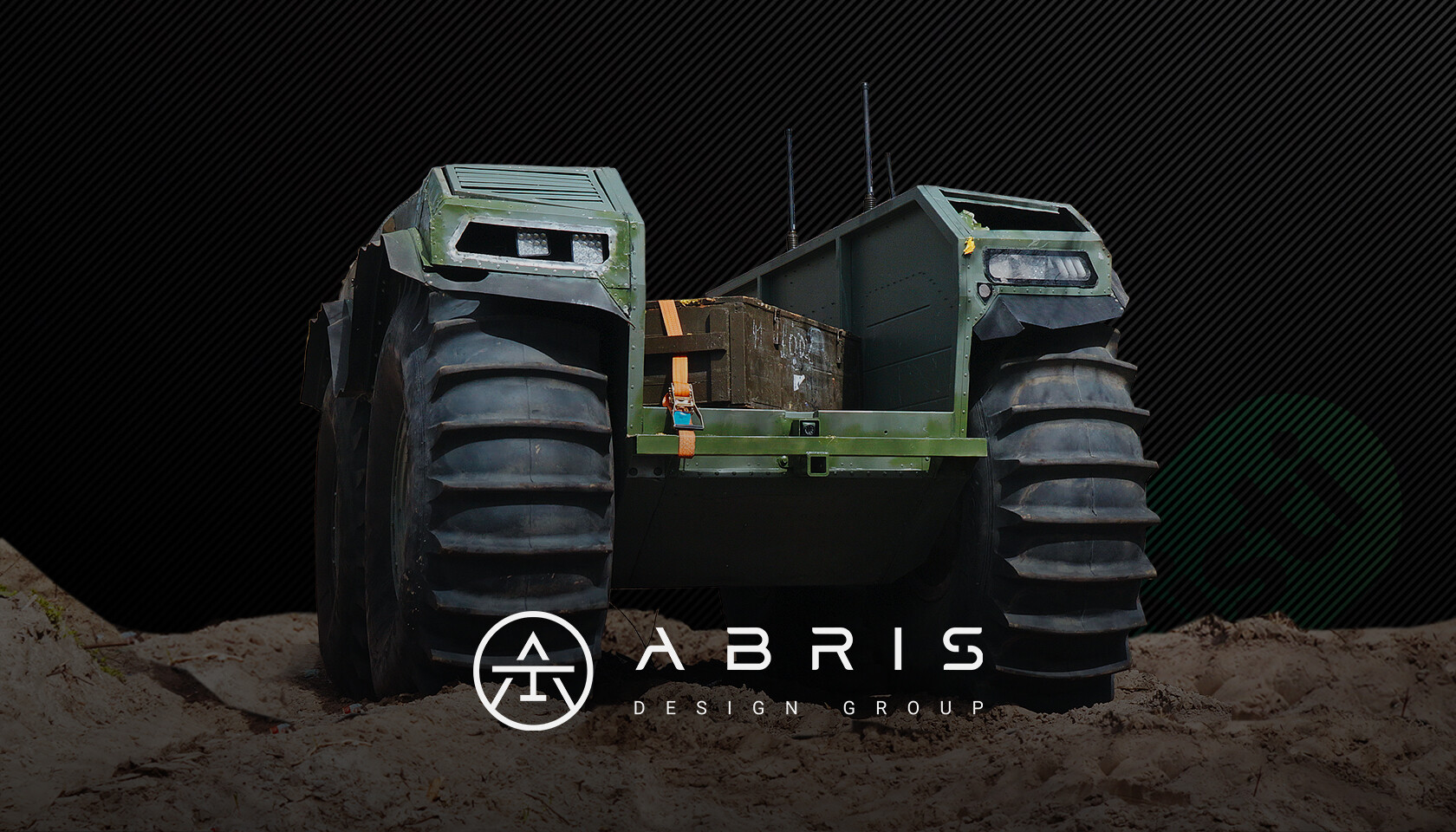
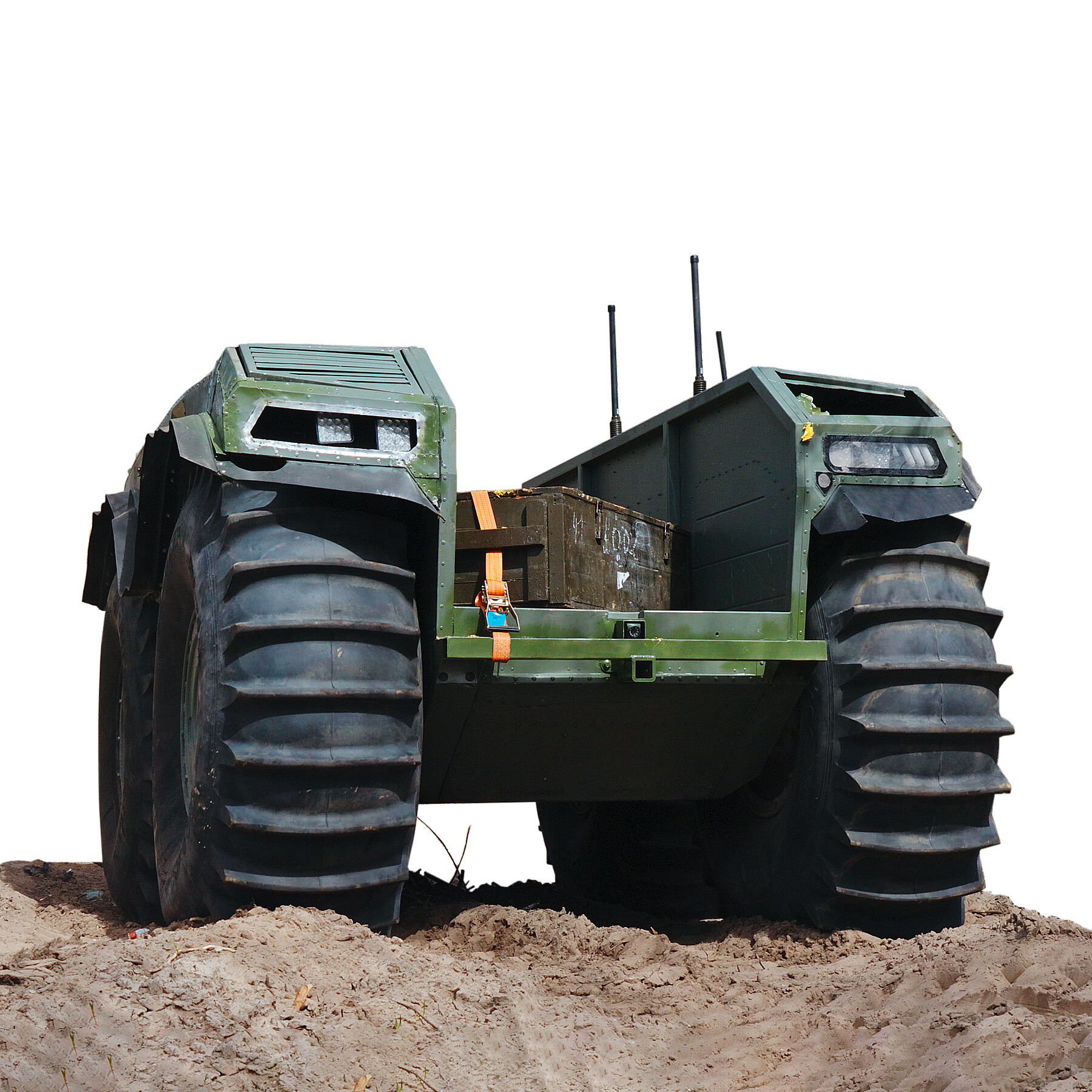

The Abris Unex UGV represents a major leap forward in unmanned ground vehicle design, merging rugged mechanical engineering with intelligent autonomy. Built for the most hostile and unpredictable terrains, this electric amphibious platform is more than just a remotely operated vehicle—it’s a life-saving asset that reduces risk to soldiers and first responders alike. Its oversized, high-buoyancy tyres are one of its most distinctive features, allowing the Unex UGV to float across water, crawl through thick mud, and navigate snow or debris-laden ground that would stop most conventional vehicles dead in their tracks.
Those same tyres do far more than provide traction—they are designed to absorb and withstand the detonation of anti-personnel mines beneath the wheels without sustaining critical damage. This capability makes the Unex UGV uniquely suited for military operations in mined or hostile areas, enabling it to perform tasks that would otherwise place human lives in serious danger. By deploying a vehicle like this instead of personnel, armed forces can safely conduct reconnaissance, supply runs, or even casualty extraction across terrain that would normally be off-limits due to explosive threats.
The Abris Unex UGV represents a major leap forward in unmanned ground vehicle design, merging rugged mechanical engineering with intelligent autonomy. Built for the most hostile and unpredictable terrains, this electric amphibious platform is more than just a remotely operated vehicle—it’s a life-saving asset that reduces risk to soldiers and first responders alike. Its oversized, high-buoyancy tyres are one of its most distinctive features, allowing the Unex UGV to float across water, crawl through thick mud, and navigate snow or debris-laden ground that would stop most conventional vehicles dead in their tracks.
Those same tyres do far more than provide traction—they are designed to absorb and withstand the detonation of anti-personnel mines beneath the wheels without sustaining critical damage. This capability makes the Unex UGV uniquely suited for military operations in mined or hostile areas, enabling it to perform tasks that would otherwise place human lives in serious danger. By deploying a vehicle like this instead of personnel, armed forces can safely conduct reconnaissance, supply runs, or even casualty extraction across terrain that would normally be off-limits due to explosive threats.
As modern warfare evolves, unmanned vehicles like the Unex UGV have become central to a new approach that prioritizes remote operation and human safety. In today’s world—where drone warfare, improvised explosive devices, and ambush tactics dominate—keeping humans out of the danger zone is more important than ever. The Unex platform can be remotely controlled for direct missions or pre-programmed with autonomous navigation routes, allowing it to carry out objectives with minimal oversight. This means commanders can send a vehicle ahead to test terrain integrity, deliver ammunition, or even retrieve an injured soldier without risking additional personnel.
The fully electric drive system not only offers quiet operation and low thermal signature, making it harder to detect, but also ensures cleaner energy efficiency and reduced maintenance compared to combustion-based alternatives. The long operational endurance of the Unex UGV ensures that it can sustain missions for extended periods, supporting logistics operations, tactical surveillance, or disaster response efforts far from a command post.
Outside of warfare, the Unex platform has significant potential in industrial and disaster-response applications. Its amphibious and all-terrain nature makes it ideal for tasks like surveying flood zones, transporting tools and supplies through unstable terrain, or delivering aid where conventional vehicles can’t reach. In environments contaminated by radiation, chemicals, or unexploded ordnance, the Unex UGV can safely venture where humans cannot, collecting vital data or conducting cleanup operations autonomously.
The ability to integrate different modules—whether for reconnaissance cameras, medical evacuation stretchers, or supply containers—makes the Unex system a truly modular solution. In practice, this means a single vehicle can be rapidly adapted for multiple mission types, offering excellent value and operational flexibility.
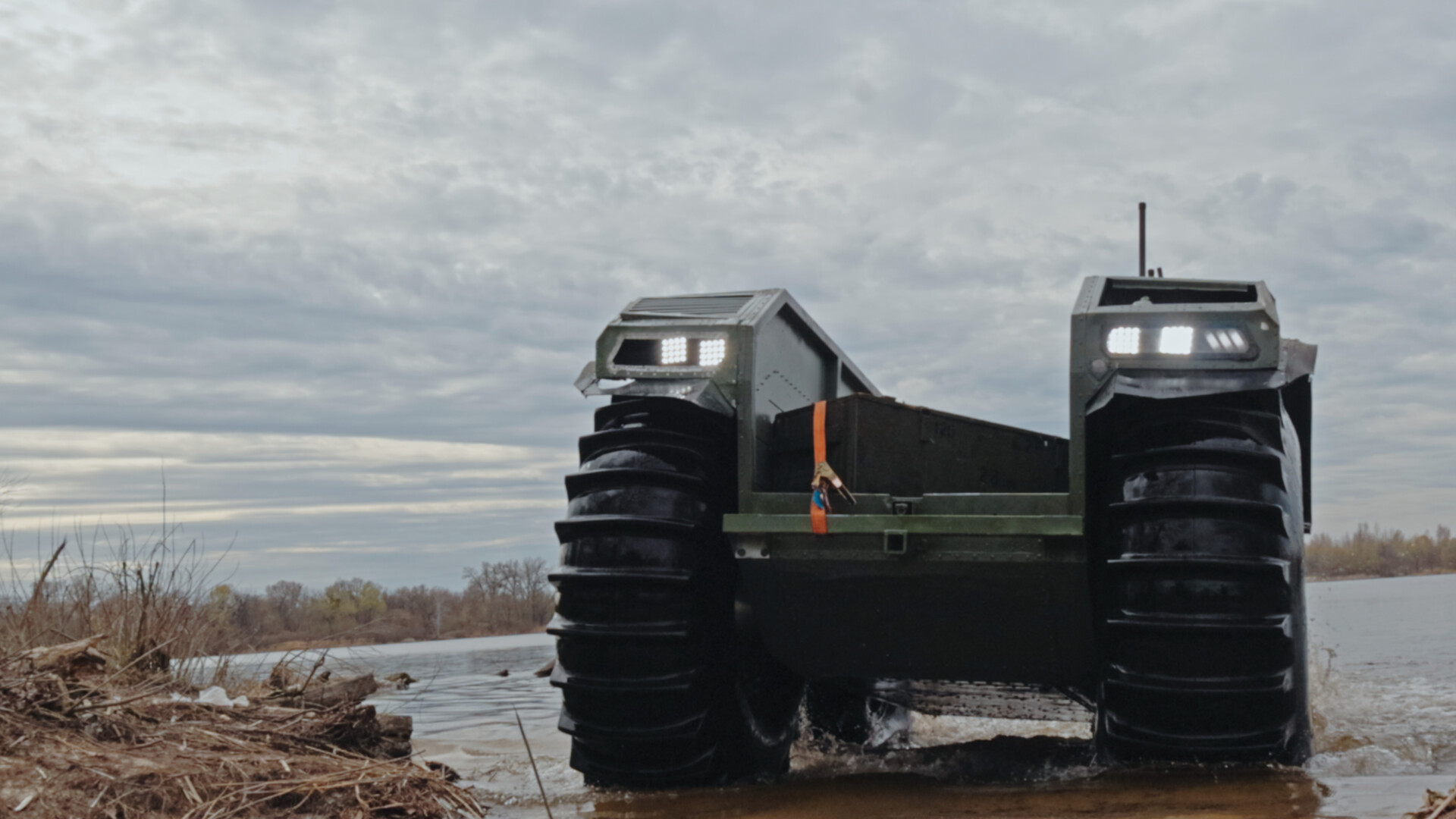
Abris Unex – unmanned ground vehicle
In an era where technology is rapidly transforming military and industrial logistics, the Abris Unex UGV stands out as a reliable and intelligent asset designed to endure extreme conditions while keeping people out of harm’s way. Its large, mine-resistant tyres are not just a feat of engineering—they are a symbol of the modern shift towards safer, smarter, and more efficient field operations.
As conflicts and crises become increasingly complex, vehicles like the Unex UGV will continue to play a crucial role in bridging the gap between human capability and technological resilience, ensuring missions are completed effectively without the tragic cost of human life.
As modern warfare evolves, unmanned vehicles like the Unex UGV have become central to a new approach that prioritizes remote operation and human safety. In today’s world—where drone warfare, improvised explosive devices, and ambush tactics dominate—keeping humans out of the danger zone is more important than ever. The Unex platform can be remotely controlled for direct missions or pre-programmed with autonomous navigation routes, allowing it to carry out objectives with minimal oversight. This means commanders can send a vehicle ahead to test terrain integrity, deliver ammunition, or even retrieve an injured soldier without risking additional personnel.
The fully electric drive system not only offers quiet operation and low thermal signature, making it harder to detect, but also ensures cleaner energy efficiency and reduced maintenance compared to combustion-based alternatives. The long operational endurance of the Unex UGV ensures that it can sustain missions for extended periods, supporting logistics operations, tactical surveillance, or disaster response efforts far from a command post.
Outside of warfare, the Unex platform has significant potential in industrial and disaster-response applications. Its amphibious and all-terrain nature makes it ideal for tasks like surveying flood zones, transporting tools and supplies through unstable terrain, or delivering aid where conventional vehicles can’t reach. In environments contaminated by radiation, chemicals, or unexploded ordnance, the Unex UGV can safely venture where humans cannot, collecting vital data or conducting cleanup operations autonomously.
The ability to integrate different modules—whether for reconnaissance cameras, medical evacuation stretchers, or supply containers—makes the Unex system a truly modular solution. In practice, this means a single vehicle can be rapidly adapted for multiple mission types, offering excellent value and operational flexibility.
In an era where technology is rapidly transforming military and industrial logistics, the Abris Unex UGV stands out as a reliable and intelligent asset designed to endure extreme conditions while keeping people out of harm’s way. Its large, mine-resistant tyres are not just a feat of engineering—they are a symbol of the modern shift towards safer, smarter, and more efficient field operations.
As conflicts and crises become increasingly complex, vehicles like the Unex UGV will continue to play a crucial role in bridging the gap between human capability and technological resilience, ensuring missions are completed effectively without the tragic cost of human life.